The Literary Distance
"To make something good, just do it. To make something great, just re-do it, re-do it, re-do it. The secret to making fine things is in remaking them."
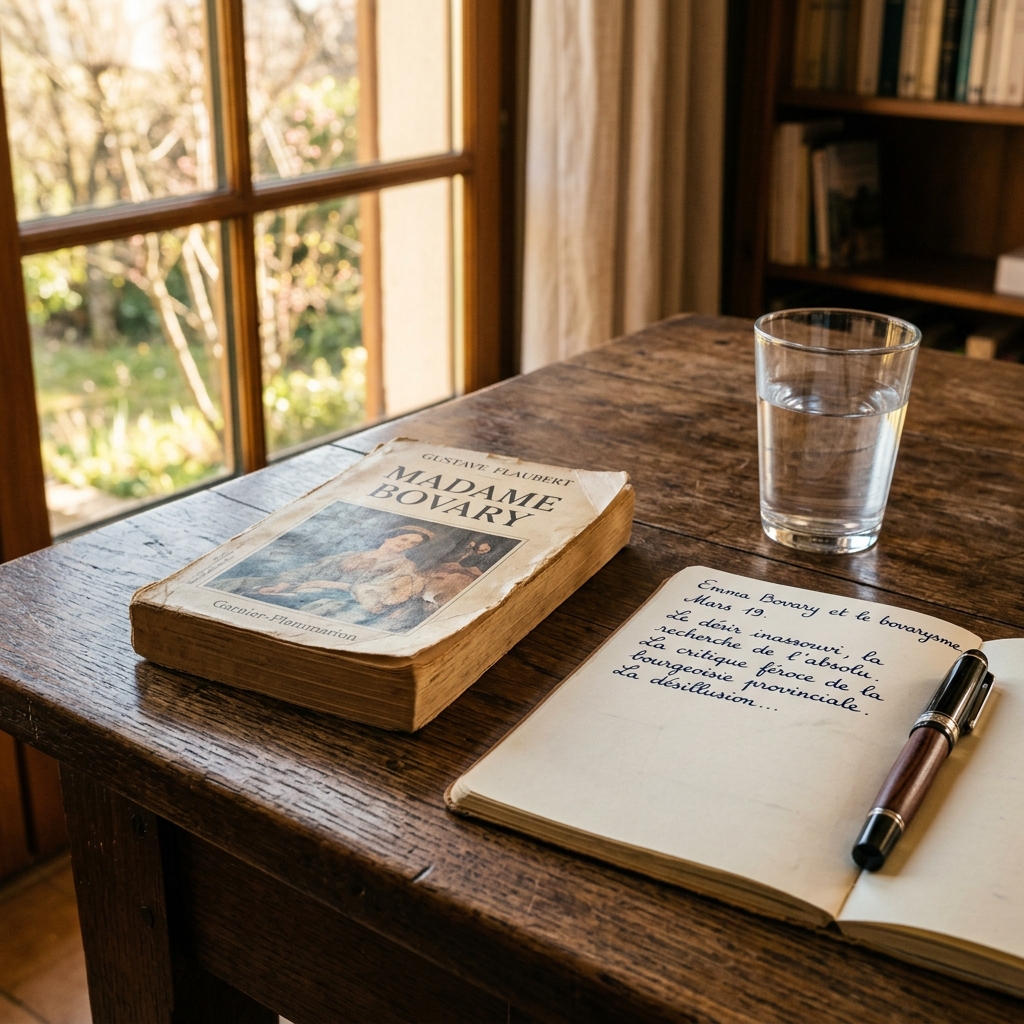
He turned back on Monday morning and read what he had written in September.
The early pages were different. He had known they would be, in the abstract way you know things before you know them in the specific, but the specific was more pronounced than he had prepared for. The September pages were reaching for effects they hadn't yet earned. The sentences were longer than they needed to be, the descriptions more elaborated than the story required, the prose working harder than its content demanded. It was the writing of someone who did not yet trust that the true thing was enough, who was compensating for that doubt with language.
He read ten pages and felt the particular discomfort of recognizing your earlier self in something you made, not quite embarrassment, not quite tenderness, something partway between them.
Then he opened a new document alongside the manuscript and began to revise.
He rewrote three pages on Monday. It took five hours. The drafting of the original three pages had taken perhaps ninety minutes, which meant revision was running at roughly three times the cost of drafting, which seemed about right for the ratio of good work to easy work in his experience. The pages were better afterward. Noticeably, unambiguously better. He read them back and felt the specific satisfaction of a thing made more true by the remaking, the way a sentence that has been revised twice has a different quality from one that arrived whole: more considered, more earned, the unnecessary things removed and the necessary ones given their proper weight.
He wrote in the notebook that evening: Écrire, c'est facile. Réécrire, c'est le vrai travail.
He looked at the sentence and then added: C'est aussi plus honnête. The first draft was what he had thought. The revision was what he actually meant.
Mark Twain had written that the secret to getting ahead was getting started, and the secret of getting started was breaking the overwhelming task into small manageable ones and beginning on the first. The revision had felt impossible from a distance. Three pages was not impossible. Three pages was simply work, performed in sequence, one sentence at a time. He did three more on Tuesday. Three more on Wednesday. By Thursday he had nine revised pages and a different relationship with the early manuscript than he had had at the start of the week, not dread exactly, but the honest respect of someone who understands the distance between where they started and where they need to be.
Wednesday evening, a message from Elise.
Three sentences. She had been reading about Montpellier, she said, and she did not explain why, and he did not need her to, and she had come across the Marché du Lez. She had always wanted to go to a market like that. She hoped he was eating well.
He read this three times not because it required three readings but because the first two were for comprehension and the third was for the quality of it: the lightness of it, the specific casual warmth of someone who has cleared a channel of its old static and is testing the frequency with something uncomplicated.
He wrote back within the hour. He described the market in the mixed French and English that had become his natural register for writing to people who knew him: the cheese stall with its concentric circles of ambition, the fishmonger on ice, the dog under the table conducting its assessment of the foot traffic. He described the Quantum Café and the Schrödinger cortado. He said Montpellier was, in the specific sense of the word that meant he had not expected to mean it when he first used it, home.
He sent it and felt nothing complicated. Just the easy warmth of a thing that had been heavy and was now simply there, at a comfortable distance, belonging to both of them equally and to neither of them exclusively.
C'est relatif, he thought, borrowing the café's philosophy. Where you were standing determined what you felt. He was standing in March, in Montpellier, in the present tense. The distance had done its work.
Thursday. Room 7. The March light at the angle it had settled into now, warm and decided, the Antigone columns casting shorter shadows than they had cast all winter.
"Bonjour," he said.
"Bonjour. Comment tu vas?"
"Bien. J'ai commencé à réviser." I have started revising.
She looked at him with the quality of attention that registered what was said and what was meant by it. "Comment tu te sens?"
"Like the early pages were written by someone who didn't trust the material," he said. "And the revision is learning to trust it retroactively."
"The revision is the writer you are now," she said, "correcting the writer you were then."
He nodded. This was exactly right and more precisely put than his own version.
Her hands flat on the table. "Aujourd'hui: le passé simple."
"There is a tense in French," she said, "that you have never been asked to produce. You have not needed it for speaking or for most writing. But you have encountered it every time you have read serious French literature, and you will encounter it every time you read it again, and without understanding it you cannot fully inhabit the language's most important texts." She looked at him steadily. "The passé simple. The literary past tense."
She wrote on the tablet:
• Il parla. (He spoke.)
• Elle finit. (She finished.)
• Ils prirent. (They took.)
"These are passé simple forms," she said. "You will not use them in conversation. You will rarely use them in informal writing. But you will read them constantly, and you must be able to recognize and understand them."
She wrote the formation:
Le Passé Simple: Formation:
-er verbs: remove -er, add -ai, -as, -a, -âmes, -âtes, -èrent
| Subject | parler |
|---|---|
| je | parlai |
| tu | parlas |
| il/elle | parla |
| nous | parlâmes |
| vous | parlâtes |
| ils/elles | parlèrent |
-ir and -re verbs: remove infinitive ending, add -is, -is, -it, -îmes, -îtes, -irent
| Subject | finir | prendre |
|---|---|---|
| je | finis | pris |
| tu | finis | pris |
| il/elle | finit | prit |
| nous | finîmes | prîmes |
| vous | finîtes | prîtes |
| ils/elles | finirent | prirent |
Irregular passé simple forms, essential to recognize:
| Infinitive | Key forms |
|---|---|
| être | je fus, il fut, ils furent |
| avoir | j'eus, il eut, ils eurent |
| faire | je fis, il fit, ils firent |
| venir | je vins, il vint, ils vinrent |
| voir | je vis, il vit, ils virent |
| dire | je dis, il dit, ils dirent |
| pouvoir | je pus, il put, ils purent |
"The circumflex accents on the first and second person plural forms," she noted, "are the reliable signal that you are reading passé simple rather than present or imperfect. Nous parlâmes, vous finîtes: the circumflex is the tense's signature."
He looked at the tables. The forms were strange, archaic-feeling, as though they had been preserved in amber from an earlier version of the language. Il parla. Il vint. Il vit.
"Il vint, il vit, il vainquit," he said. He came, he saw, he conquered. Veni, vidi, vici, the Latin rendered into French passé simple, which was where it lived in every French history book he had ever encountered. He had seen the phrase and not known what he was seeing. Now he did.
She looked at him with the brightness in her eyes. "You recognized the reference."
"I recognized the Latin before I understood the French," he said. "That's changing."
"C'est en lisant qu'on apprend à lire," she said. It is by reading that one learns to read. The gerund, the grammar of Chapter 22, arriving naturally in context. "And you are about to do exactly that."
She had brought something he had not seen before in Room 7: a book. A physical book, a paperback with the particular quality of a much-read copy, the spine slightly cracked, the cover slightly worn. She set it on the table between them.
Madame Bovary. Gustave Flaubert. The French edition.
"Flaubert," she said, "is one of the great practitioners of the passé simple. This novel lives in it. Every narrative event, every scene, every action: passé simple. The narrator stands at a deliberate distance from the events, and the tense creates that distance. It is a narration that says: these things happened, they are sealed, they are being observed from far enough away to be seen clearly."
She opened the book to a page she had marked and turned it toward him. He looked at the French, printed in the compact font of the paperback edition, and felt the familiar slight tightening of a person approaching something that might exceed them.
She read aloud, slowly, her voice giving the passé simple its correct weight:
"Charles fut surpris de la blancheur de ses ongles. Ils étaient brillants, fins du bout, plus nettoyés que les ivoires de Dieppe, et taillés en amande. Sa main pourtant n'était pas belle, peut-être pas assez pâle..."
She stopped. "Parse the verbs," she said. "Which are passé simple?"
He looked at the passage. Fut, il fut, he was. Étaient: no, imperfect, ongoing description. Taillés: past participle, passive. N'était pas: imperfect again.
"Fut," he said. "Charles fut surpris. Passé simple of être."
"Yes. One passé simple in that short passage. The rest are imperfect, because Flaubert is describing an ongoing state, a quality, something continuous. The passé simple arrives for the single event: Charles was surprised. A moment, sealed. Everything else is the sustained condition surrounding that moment."
He looked at the passage differently now. The passé simple as a point, the imperfect as the field around it. The event and the atmosphere of the event, kept grammatically separate so the reader could feel the difference between them.
Proust had written do not wait for life, do not long for it, be aware always that the miracle is in the here and now. The passé simple was the grammar of the not-here-and-now, the grammar of the sealed past, and Proust, who had written a novel in that tense about the recovered past, had also written its philosophical inverse: the present moment as the place where life actually lived. The two ideas in tension: the passé simple making the past observable, the present moment making it possible to observe from.
"The Montreal sections of my manuscript," Julien said slowly. "I've been writing them in the passé composé."
She looked at him.
"They should be passé simple," he said. "Shouldn't they. The narrator is here, in Montpellier, in the present tense. The Montreal material is sealed. Observed from a distance. It needs the literary past."
"That is a craft decision," she said carefully, "not a grammar rule. Both tenses are grammatically acceptable. But you are right that the passé simple creates a different relationship between the narrator and the past material. More deliberate. More distanced." A pause. "More novelistic."
He sat with this. The revision he had been doing all week had been sentence-level: trimming, clarifying, trusting the material more. This was structural. This was the narrator's relationship to time itself.
"Show me," she said, and turned the tablet toward him. "Take a sentence from your manuscript, any sentence from the Montreal sections, and rewrite it in the passé simple."
He thought for a moment and wrote:
J'ai quitté Montréal en septembre. (Passé composé: I left Montreal in September.)
Below it:
Je quittai Montréal en septembre. (Passé simple.)
He looked the two sentences side by side. The first was a fact stated by the present speaker, connected to the present moment. The second was the same fact placed at a distance, sealed, narrated rather than confessed.
"Je quittai," she said. "How does it feel?"
"Like a novel," he said. "The first one feels like a letter. The second one feels like a novel."
"Voilà," she said.
He wrote two more conversions on the tablet. Il dit quelque chose d'important. He said something important. Became: Il dit quelque chose d'important. He paused. The passé simple of dire was il dit, identical in spelling to the present tense il dit. He flagged this.
"One of the tense's small traps," she confirmed. "Dire in the passé simple third person singular is spelled identically to the present tense. Context distinguishes them. In a literary narrative full of other passé simple forms, il dit will be passé simple. In an everyday conversation, it will be present." She paused. "The language trusting the reader to know where they are."
He nodded and wrote the third conversion: Elle a attendu. She waited. Passé composé. Became: Elle attendit. Passé simple. Attendit, using the -it ending from the -ir/-re pattern. He had formed it correctly without checking the table.
She looked at it. "Attendit is correct," she said. "And more precise than elle a attendu. The waiting is sealed. Done. A single event in a sealed past."
He looked at the word on the tablet.
Elle attendit. She waited.
He did not say anything for a moment. The third person, the feminine subject, the sealed past. The word sitting on the page with the weight of things correctly named.
Jim Rohn had written that we must all suffer one of two things: the pain of discipline or the pain of regret. He had chosen the pain of discipline: the five hours of revision on Monday, the nine pages rewritten, the passé simple now being applied to the manuscript in his head even before he sat back down at the laptop. The alternative was the page as he had first drafted it, and the person he had been when he drafted it, and both of those were the past tense in every sense the language had available.
Elle attendit. She waited. And then she stopped waiting, and moved to Vancouver, and the channel cleared, and a message arrived on a Wednesday evening with three casual sentences about a market and a hope that he was eating well.
The passé simple. The sealed past. Observed from a distance that gave it its shape.
She worked him through the remaining structures in the lesson's final section: the passé simple in longer narrative passages, how to read through it without stumbling, how the circumflex served as a reliable guide in ambiguous forms, how certain common phrases (il fut, il y eut, il se passa) appeared so frequently in literary French that they needed to become as familiar as the verb être in the present.
She read one more short passage from Flaubert, this time without stopping, and he followed it. He understood perhaps eighty percent of the vocabulary and close to one hundred percent of the grammar. The tense no longer interrupted his comprehension: it passed through him the way the familiar tenses did, carrying its meaning without announcing its own machinery.
"Tu lis du français," she said, when he looked up from the page.
"Je lis du français," he agreed.
It was a simple sentence. It was also the most significant thing either of them had said in twenty-four weeks of Thursday lessons, and they both knew it, and neither of them made more of it than that, which was, he had come to understand, the correct way to receive a thing that was genuinely large.
They walked. March doing what March did now, giving itself fully to the warmth it had been building toward, the city receiving it with the matter-of-fact pleasure of a place that knows the seasons and has learned to trust them. The Lez ran with purpose. The plane trees were putting out their first leaves, small and tentative and entirely committed.
She told him about the private record. What she had written that week. The café years described with honesty rather than the efficient minimalism she had previously brought to them. She told him she had written about the counter as a place where she learned what people carried, not as a limitation or a labor, but as an education in the specific texture of human longing. She had written about it and found, in the writing, that she did not need to diminish it to claim what had come after.
"Les deux sont les miens," she said. The words from Chapter 21 returning, but meaning something slightly different now: not the two versions of a person held in uncertain tension, but two periods of a life claimed equally, the fixed-point years and the chosen years, each genuinely hers.
He walked beside her for a moment without speaking.
"Writing it made it real," he said.
"Yes," she said. "That is what you told me writing did."
He looked at her. She had taken his observation about writing (c'est en écrivant qu'on trouve ce qu'on pense) and applied it to her own private record, to her own history, to the version of herself she had been before she chose the version she was becoming. She had taken his lesson and used it, which was the correct direction for a lesson to travel.
"Kevin Kelly wrote," he said, "that to make something good, just do it. To make something great, remake it." He paused. "You're remaking the café years. Not the years themselves, but the account of them."
"Le récit," she said. The narrative. The account. "Le passé simple de ma propre histoire." The simple past of my own history. She said it with the slight quality of someone recognizing something as they say it, the thought completing itself in the speaking. "Not the passé composé, not j'ai été barista, I have been a barista, connected to now. The passé simple: je fus barista. I was a barista. Sealed. Observed from here, from what I am now, with the distance that gives it its shape."
He looked at her.
"Voilà," he said, borrowing her word back to her.
She received this with the stillness she brought to things that had arrived precisely. The sapphire light at her neck held its rhythm in the March afternoon, and they walked on through the Antigone district, past the columns and the pediments and the pale stone of Bofill's invented antiquity, and neither of them said anything for a while, and the not-saying was in the register they had been developing together for six months: the register without a clean name, the one that sits between the formal and the familiar, the one that corresponds to what they were to each other.
At the end of the promenade they stopped.
"Au revoir, Lumière."
"Au revoir, Julien. Tu lis du Flaubert. Je lis du français. Nous apprenons tous les deux."
She looked at him with the brightness that indicated she had been surprised in a way she found agreeable. "Nous apprenons tous les deux," she confirmed. Then: "À bientôt."
"À bientôt."
He walked home through the March city saying the passé simple forms to himself the way he always worked the new grammar into the rhythm of walking. Not to practice producing them: he would rarely produce them, but to make them part of him, recognizable on sight, available to the reading eye.
Il parla. Il vint. Il vit. Il fut. Il prit. Il dit. Il attendit.
He spoke. He came. He saw. He was. He took. He said. He waited.
Seven passé simple forms, seven sealed pasts, the grammar of events that had happened and were done and were now being observed from a sufficient distance to be seen clearly.
He got home and opened the manuscript. He did not revise tonight. He read the Montreal sections, the passé composé forms in his head, hearing them in the passé simple, feeling the difference between j'ai quitté and je quittai, between the confessional and the novelistic, between the letter and the book.
He closed the laptop.
He opened the notebook and wrote one line in French, in the passé simple, the tense of the sealed and the observed:
Je partis. Et puis je revins à moi-même.
I left. And then I returned to myself.
He looked at it for a long time. Then he closed the notebook and went to bed, and the March city continued its patient business outside the courtyard window, and the vine on the opposite wall had three more leaves than it had had that morning.
End of Chapter 24
© 2026 William Newell. All rights reserved.
Le Choix d'Être (The Choice to Be) is an original literary work protected by copyright. No part of this novel may be reproduced, copied, distributed, translated, or transmitted in any form or by any means — electronic, mechanical, or otherwise — without the prior written permission of the author. Unauthorized use constitutes copyright infringement and may result in legal action.
For permissions and licensing inquiries, contact: JoeNewell68@gmail.com