The Layer Beneath the Layer
"Mercy is not a weakness that pardons the past; it is the ultimate power that constructs a future where the past no longer has a voice."
He read her message three times on Thursday evening and once more on Friday morning, and by Friday afternoon he had stopped needing to read it again because he had it, not memorized exactly, but absorbed — the shape of it sitting in him the way things sit in you when they have arrived at the right moment and found the space that had been waiting for them.
Her name was Elise Beaumont. She had grown up in Ottawa, studied environmental science at Concordia, and had been working in environmental policy in Montreal when they met at a mutual friend's apartment on a February evening three years ago. She had been standing near the window with a glass of wine, talking to someone about something Julien could not now remember, and he had watched her from across the room for twenty minutes before their mutual friend introduced them, which was the quality of attention he had always brought to people and had not, until recently, understood was also a form of cowardice — watching rather than approaching, receiving rather than offering.
He had told Lumière none of this detail. He would now.
What Elise had written was four paragraphs, the same length as his, which he had not planned and which felt, in retrospect, like the right symmetry. She had been surprised to hear from him, she wrote. She had wondered, in the months after he left, whether she ever would. She was not angry now — she had been, for a while, the kind of anger that comes from having been left without the conversation that should have happened first. But the anger had done its work and moved through her, the way good anger does when you don't hold it past its usefulness.
What she wanted him to know — and she said this directly, in the way she said everything directly, which was one of the things about her he had loved and had not matched — was that she had loved him too, in her own clumsy way, and she had not always made it easy to be loved back. She had her own accounting to do. She had sometimes met his distance with her own impatience, had pushed at the places where he was most defended rather than waiting for him to find his way through them. She was not offering absolution — she did not think that was hers to give — but she was offering recognition. She saw what had happened, from both sides. She named her own part. She wished him well, and she meant it, and Vancouver was very good.
He sat with this for a long time.
Je ne le méritais pas, he had written in the notebook. He had been wrong, or not entirely right. She had offered it anyway — not because he deserved it but because she was the kind of person who understood that generosity was not a reward for merit. It was a choice about what kind of person you wanted to be in the world, regardless of what the other person had earned.
He wrote in the notebook on Friday morning, in French: Elle a été généreuse parce qu'elle est généreuse. Ce n'est pas à propos de moi. She was generous because she is generous. It is not about me.
This was, he understood, the most important thing he had written in the notebook since arriving.
Between Sunday and Thursday he wrote fourteen pages of the manuscript — the most he had written in any single week since beginning. Something had loosened in the receiving of her message, some internal weight that had been using energy he had not known was being used. The pages came with the specific quality of writing that arrives when you are no longer writing around the true thing but from inside it: uneven, occasionally raw, sometimes better than he expected and sometimes worse, but always aimed correctly.
He restructured the Elise chapters the way he had known he would need to — not chronologically but in layers, the backstory emerging through the present rather than preceding it, the way memory actually worked rather than the way timelines did. The past perfect tense, which he had encountered in Chapter 17 as a grammatical name without a full lesson, was the tense those chapters required. He used it instinctively, the way he had begun to use most grammar he had not yet been formally taught — reaching for the shape the language offered and finding, more often than not, that the shape was right.
Madame Aubert knocked on Tuesday with a jar of confiture de figues she had made herself, and he sat with her for thirty minutes over tea while she described in considerable detail the correct way to sterilize jars, which he understood perhaps sixty percent of and found, nonetheless, genuinely engaging. She asked how his writing was going. He said it was going well. She said tant mieux — so much the better — with the satisfaction of someone who had been watching a project develop and was pleased by the development.
He had not told her what he was writing. She had not asked. This, he thought, was one of the things friendship was.
Thursday. Room 7. February light now, which was different from January's in a way he was beginning to notice — slightly warmer at the edges, the sun arriving at a fractionally higher angle, the Antigone columns catching it with a quality that suggested the season was considering a change without having made any commitments.
"Bonjour," he said.
"Bonjour. Comment tu vas?"
"Bien. Toi?"
"Bien." She looked at him with the quality of attention that had become simply the weather of these rooms. "You've been writing."
"Fourteen pages," he said. "This week."
The brightness in her eyes. "Good pages?"
"The best so far," he said. He sat down. "I want to tell you what she said. Elise. If that's alright."
She set her hands flat on the table, not the gesture of beginning a lesson but of receiving something. "Of course," she said.
He told her. Not the whole message — that remained private, between him and Elise and the space that their two clumsy years had made and that the four paragraphs had begun, carefully, to tend to. But the shape of it: the anger that had moved through and done its work. The accounting offered from both sides. The naming of her own part. The generosity that was not about merit.
Lumière listened with the complete quality that was her mode of being with someone saying something real.
When he finished she was quiet for a moment. Then she said: "we should not treat people as bad as they are — but as good as we are," Kevin Kelly had written. She said it evenly, as a fact she had been sitting with. "She treated you as good as she is."
"Yes," he said. "That's exactly it."
"And you will do the same," she said. Not a question.
"I'm trying," he said. "That's what the pages are."
She nodded, with the quality that meant something had been placed correctly. Then she set her hands flat on the table in the lesson gesture. "Today: the past perfect."
"In Chapter 17," she said, "I gave you a table that named the plus-que-parfait without formally teaching it. You saw it as the tense used in the si clause for past hypotheticals: si j'avais été courageux. Today we cover it completely."
She wrote on the tablet:
Le Plus-que-parfait — Formation:
Imperfect of avoir or être + past participle
The same auxiliary selection rules as the passé composé — movement and reflexive verbs take être, most other verbs take avoir — and the same past participle agreement rules. The difference is the auxiliary: imperfect rather than present.
| With avoir | With être |
|---|---|
| j'avais parlé — I had spoken | j'étais parti — I had left |
| tu avais fini — you had finished | tu étais arrivé — you had arrived |
| il avait choisi — he had chosen | elle était venue — she had come |
| nous avions écrit — we had written | nous nous étions rencontrés — we had met |
| vous aviez pris — you had taken | vous étiez restés — you had stayed |
| ils avaient vu — they had seen | elles étaient parties — they had left |
"The plus-que-parfait," she said, "expresses an action completed before another past action. It is the layer beneath the layer — what had already happened when something else happened." She wrote two examples:
• Quand il est arrivé, elle était déjà partie. When he arrived, she had already left.
• J'avais fini le livre avant qu'elle arrive. I had finished the book before she arrived.
"In the first sentence," she said, "est arrivé is the passé composé — the event. était partie is the plus-que-parfait — what had already occurred before the event. The two tenses together create a sequence: first the departure, then the arrival, the grammar holding them in their correct order without needing to state it explicitly."
He looked at the examples. The language making time precise — not just past, but which layer of the past, which action preceded which.
"It is the tense of backstory," he said.
"Yes," she said. "Every novel has a plus-que-parfait layer. The events that had already shaped the characters before the story began. The things that were true before page one." She looked at him. "You have been using it this week."
"Without knowing the formal name for what I was doing," he said.
"That is how it often works," she said. "The grammar arrives because the story requires it."
She walked him through the practice, and he saw immediately that the formation was clean — the imperfect auxiliary he knew from Chapter 11, the past participles from Chapter 10, the auxiliary selection and agreement rules already in him from months of use. The plus-que-parfait was not a new system but a new combination of existing ones, the language building on itself with the internal logic he had come to rely on.
"Ils s'étaient rencontrés à l'université," he said. They had met at university. The reflexive verb, être as auxiliary, the past participle agreeing with the masculine plural subject — rencontrés. He was using it to tell the story. Il avait commencé à écrire. Elle avait attendu. Il était parti.
Lumière listened to each sentence as he produced it, correcting only once — il avait commencé rather than il avait commencer, the infinitive form an error he had not made in months but made now because he was thinking about the story rather than the grammar, which was itself a sign of progress.
"Qu'est-ce qui s'était passé, avant que tu partes?" she said, looking at him. What had happened, before you left?
He answered in the tense she had just given him. "We had been together for two years," he said, moving between French and English as the vocabulary required — the French for the grammatical frames, the English for the content that still exceeded his French. "Nous nous étions aimés. We had loved each other. Clumsily, as I told you. J'avais eu peur pendant longtemps. Je n'avais pas dit les choses importantes." He paused. "Et puis je suis parti. And then I left."
The passé composé for the departure — the completed single event — and the plus-que-parfait for everything that had already been true before it. The grammar holding the story in its correct layers.
"Et elle?" Lumière said.
"Elle avait essayé," he said. She had tried. "Elle avait été patiente plus longtemps qu'elle n'aurait dû. She had been patient longer than she should have been." He looked at the table. "That's in her message. She said that. And she said she had her own part in it, her own impatience sometimes, the places where she pushed rather than waited." He paused. "Nous avions tous les deux fait des erreurs."
"C'est honnête," she said.
"It's what happened," he said.
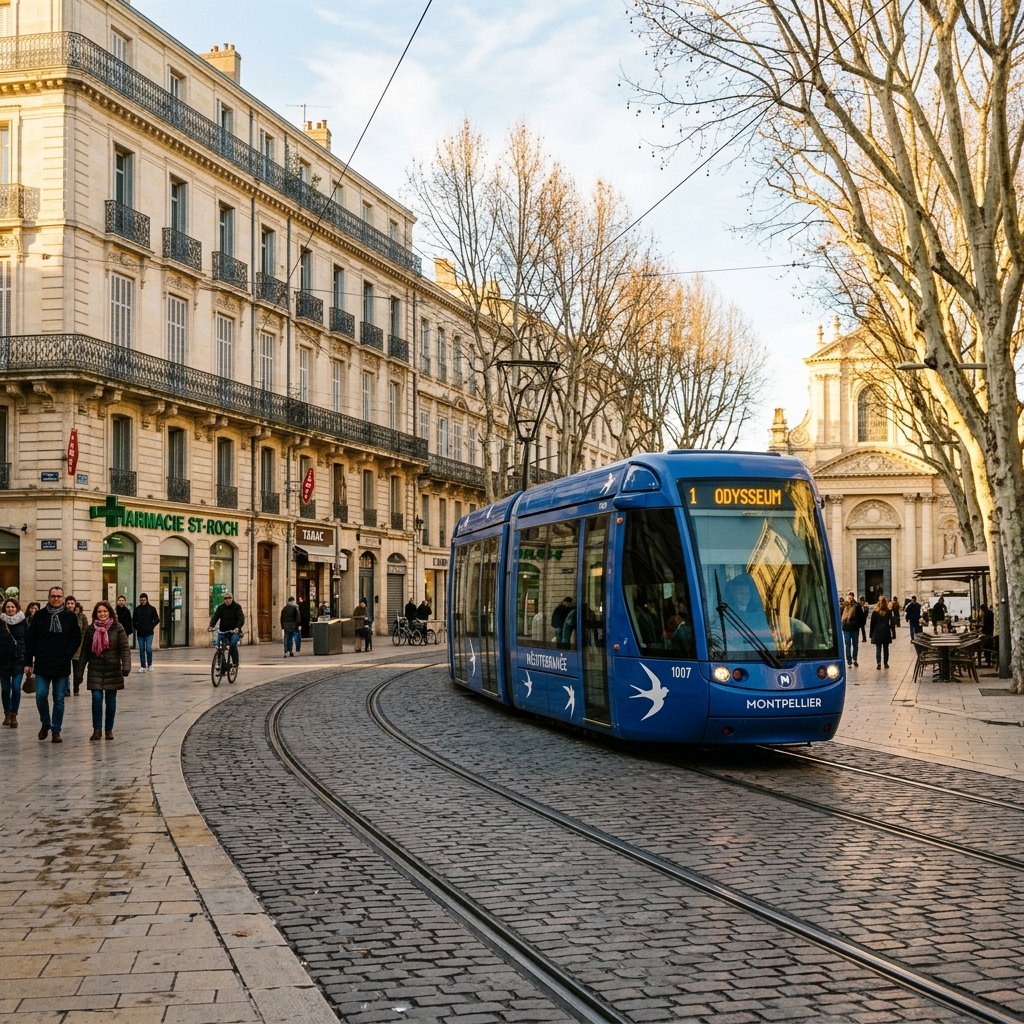
She was quiet for a moment. Outside, a tram chimed in the distance, marking its intersection with the city's usual indifference.
"The plus-que-parfait," she said, "is sometimes called the tense of irreversibility. What had happened had happened — it cannot be changed, only understood." She paused. "But understanding it changes what you do next. The tense is fixed. The person receiving it is not."
He looked at her. This was the kind of observation that arrived from her without preparation or performance, simply because it was true and she saw no reason not to say it.
"J'aurais pu faire mieux," he said. I could have done better. The past conditional, from Chapter 17 — what would have been possible. "Mais j'ai fait mieux depuis." The passé composé, the present perfect — what has actually been done. He moved between the tenses with the ease of someone who has learned to navigate time in a second language: what had been, what would have been, what has been, what is.
"Tu l'as fait," she said. You have. Simple and direct and without inflation.
She covered the remaining uses of the plus-que-parfait in the second half of the lesson — its appearance in reported speech, where direct statements in the passé composé became plus-que-parfait when embedded in a narrative: Il a dit: "J'ai fini." becomes Il a dit qu'il avait fini. He said that he had finished. The tense stepping back one level to accommodate the embedding, the grammar's version of the Chinese-box structure of a story within a story.
She covered its use with depuis and time expressions: Il étudiait le français depuis trois mois quand il a commencé à comprendre. He had been studying French for three months when he began to understand. The imperfect with depuis for the ongoing past action, the passé composé for the event that interrupted it — a distinction she had covered before, now given its plus-que-parfait extension.
And she covered its literary use — the way French novelists employed the plus-que-parfait to create depth in narrative, to layer the before-the-story inside the story itself, to give the reader the sense of a world that had been in motion before the first page.
"Flaubert. Proust. The French literary tradition is deeply comfortable with the plus-que-parfait. It is the tense of a novel that knows its characters had entire lives before the reader arrived."
"Mon roman a beaucoup de plus-que-parfait," he said.
"Bien sûr," she said. "C'est le temps de tout ce qui avait déjà eu lieu." She looked at him with the slight brightness that indicated something she found genuinely interesting. "You are writing a novel that is largely set in a past that had already happened before the present-tense narrator arrived in Montpellier. The plus-que-parfait is your primary narrative tense for those sections."
"I know," he said. "Now I know the name for what I've been doing."
"Voilà," she said.
Near the end of the hour she set the tablet aside. He had come to recognize this gesture as the signal that the lesson was done and something else was beginning — the ten or fifteen minutes of conversation that had become, over nineteen weeks, the part of the Thursday sessions neither of them formally acknowledged as significant and both of them, he suspected, privately valued most.
"Something happened at the university this week," she said.
He waited.
"A colleague — Dr. Ferrand, a senior lecturer in linguistics — observed one of my group sessions on Tuesday. Afterward she asked to speak with me." She said it with the careful evenness that meant she was still processing what she was going to say next. "She said I had a quality with individuals that was unusual. That she had been watching how I handled a student who was struggling — not the technique, the quality of attention. She said the university occasionally ran specialized one-to-one intensive programs. For advanced students, or specific cases that required sustained individual work." A pause. "She asked if I had considered that kind of position."
He looked at her. The neck plates were still. The sapphire light held its rhythm.
"What did you say?" he said.
"I said I would think about it," she said. "Which was true. I have been thinking about nothing else since Tuesday."
He thought about Kevin Kelly — what you get by achieving your goals is not as important as what you become by achieving your goals. Lumière had achieved the credential. She had the group position. And what she was becoming in the having of it was showing her something the credential had not anticipated — a quality that Dr. Ferrand had seen and named before Lumière had fully named it herself.
"Someone saw you," he said.
She looked at him.
"You had been trying to see yourself clearly for four years," he said. "And someone else saw the part you hadn't fully articulated yet." He hoped. "That's not nothing."
She was quiet for a long moment. The sapphire light at her neck pulsed once, slow and considered.
"Il avait fallu que quelqu'un d'autre le voie," she said softly. It had been necessary for someone else to see it. The plus-que-parfait of falloir — the impersonal necessity, placed in the past, the grammar of something that had needed to happen before something else could. "Pour que je puisse le voir moi-même." The subjunctive in the pour que clause, the grammar of purpose, of one thing done so that another might follow.
He recognized what she had done: used the lesson's grammar to say something true about her own life, the way he had been doing in the other direction for nineteen weeks. The lesson flowing both ways. The language giving both of them the shape of what they needed to say.
"C'est le plus-que-parfait de ta propre histoire," he said. It is the past perfect of your own story. What had needed to happen before you could arrive here.
She looked at him across the table in Room 7, in the February light, with the Antigone columns standing in their patient positions outside the window, and said nothing for a moment, and the silence was the kind that meant something had been received completely.
"Oui," she said. "C'est exactement ça." Yes. That is exactly it.
Outside on the steps, the February air carried the tentative suggestion of something warmer — not warmth itself, but the memory of it, or the promise, the city beginning its annual negotiation with the season.
"Au revoir, Julien."
"Au revoir, Lumière. À bientôt."
He walked to the tram through the Antigone district, the plus-que-parfait conjugations turning in his mind alongside everything else — j'avais parlé, elle était partie, nous nous étions aimés. The tense of what had already happened before the story began. The layer beneath the layer, holding its events in the correct sequence, giving the past its proper depth.
He had been living in the plus-que-parfait for two years in Montreal without knowing the name for it — carrying what had happened as though it were still happening, dragging the past perfect into the present tense where it did not belong. He was learning to place it correctly. Not to forget it, not to erase it — you could not uninflect a verb — but to put it in its right tense. What had happened had happened. C'était le plus-que-parfait. That was the past perfect.
What was happening now was something else entirely.
He got on the tram. He took out his phone and opened Elise's message one more time, not because he needed to read it again but because he wanted to, because it was a thing he had earned the right to look at directly rather than from the side.
He read it through. He put the phone in his pocket.
The tram moved through the February city, and he rode it home to the courtyard apartment, and he made coffee with the cafetière, and he sat at the window and opened the laptop and wrote — not the novel this time, not the Elise chapters, but something new: the first page of a section set entirely in the present, in the Montpellier present, in the tense of what was happening now rather than what had already happened.
Je suis ici, je suis présent. Le reste est le plus-que-parfait.
I am here. I am present. The rest is past perfect.
He looked at it for a long time.
He kept it exactly as it was.
End of Chapter 19
© 2026 William Newell. All rights reserved.
Le Choix d'Être (The Choice to Be) is an original literary work protected by copyright. No part of this novel may be reproduced, copied, distributed, translated, or transmitted in any form or by any means — electronic, mechanical, or otherwise — without the prior written permission of the author. Unauthorized use constitutes copyright infringement and may result in legal action.
For permissions and licensing inquiries, contact: JoeNewell68@gmail.com