Yes — And
"When brainstorming, improvising, jamming with others, you'll go much further and deeper if you build upon each contribution with a playful 'yes — and' example instead of a deflating 'no — but' reply."
Arsenault's second response arrived on a Wednesday morning and was four times longer than his first.
He wrote about specific passages. He quoted sentences back, not to praise them exactly, but to point at what they were doing and name it with the precision of someone who had been reading seriously for forty years and knew what it looked like when a piece of writing did something unusual. He noted a paragraph in the Montreal section where the narrator described watching Elise sleep from a doorway rather than lying beside her, and he said the image was doing three things simultaneously: establishing the narrator's habitual distance, implying the cost of that distance through the specificity of the doorway, and making the reader feel the loss before the narrator had named it as one. He said most writers would have written the scene from the bed.
He said one other thing, near the end.
The narrator's presence is the book's greatest achievement. Most writers hide. You are not hiding.
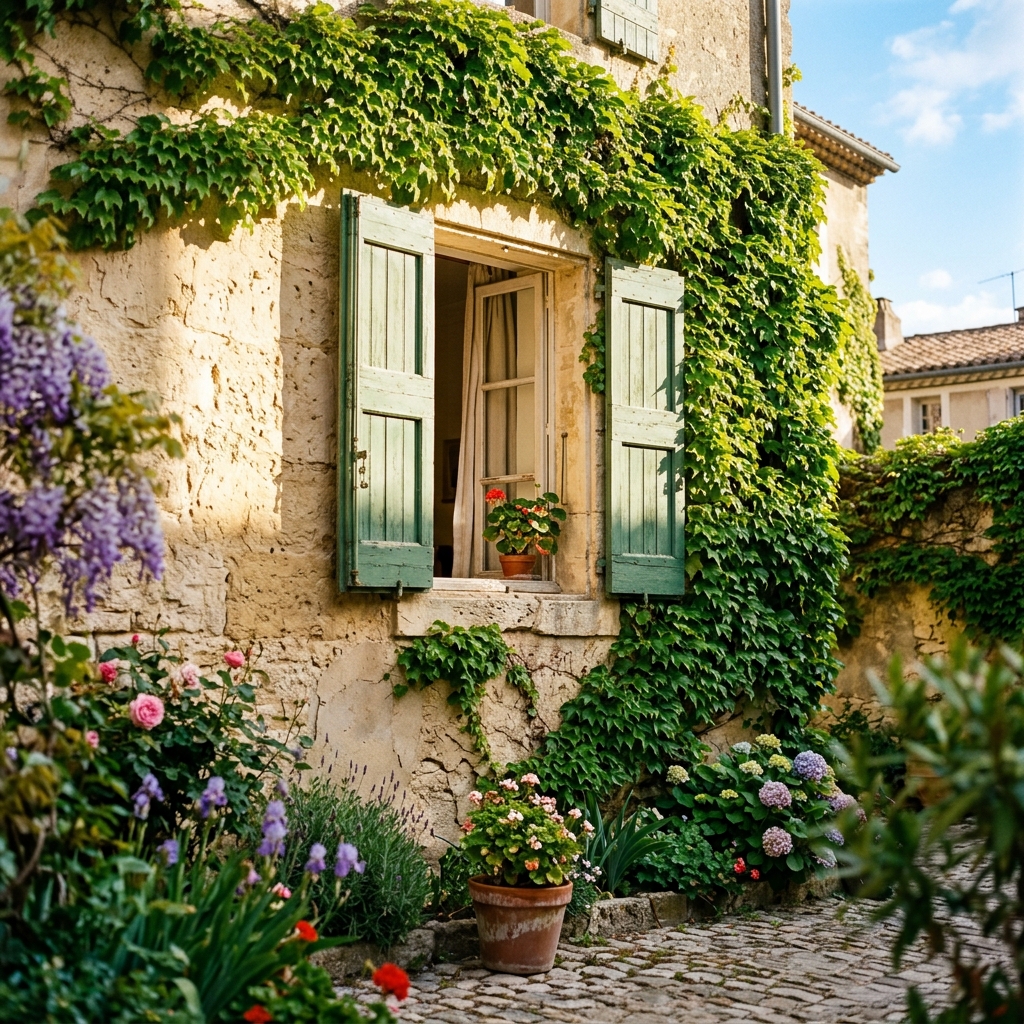
Julien read the email twice, then set his phone on the kitchen counter and made coffee and stood at the courtyard window for a long time. The vine had been fully leafed for two weeks now, no longer tentative, the green committed and ordinary. He looked at it without thinking about it.
He had been hiding for most of his adult life. Not dishonestly, not with bad intent, but with the specific efficiency of someone who had developed the habit early and refined it over years. He had hidden from Elise behind attentiveness, from his writing behind standards, from his life behind the plan of a life. He was not doing any of those things now. The manuscript was the evidence, and Arsenault had just read a hundred pages of it and named what he found.
He wrote in the notebook: Je ne me cache plus. C'est le roman qui le prouve.
Then he opened the laptop and wrote nine more pages, and they were not hiding either.
Tuesday with Madame Aubert. She had been reading, she said, a novel by a writer whose name she had seen in one of Henri's annotation systems without ever having looked him up. She described it with the focused pleasure of someone who has discovered something and is deciding how much to say about it before the person across the table can respond. Julien listened with the quality of attention that was his now, the full allocation.
She said: the writer was good because he never explained what he meant. He trusted the reader.
Julien thought about the email from Arsenault. Most writers hide. He thought about what hiding in writing actually looked like: explaining what you meant, softening the image before the reader could feel its edge, putting a hand on the reader's shoulder and saying this is the sad part. He had done all of those things in the early pages. He had been revising them out, one by one, with the slow patience of someone clearing a path.
Il faisait confiance au lecteur, he said.
Exactement, said Madame Aubert, and refilled his cup without asking.
Thursday. Room 7. The April light now, which was different from March's in the specific way of a season that has committed rather than promised. The Antigone columns warm and certain in the morning.
"Bonjour," he said.
"Bonjour. Comment tu vas?"
"Bien. Arsenault a répondu aux cent pages."
She looked at him. "Et?"
"He said the narrator's presence is the book's greatest achievement," Julien said. "He said most writers hide." He paused. "Il a dit que je ne me cachais pas."
She received this with the quality that meant it had landed precisely. "Good," she said. The word with its full weight, as always. Her hands flat on the table. "Today: conjunctions."
"Until now," she said, "we have been building sentences one clause at a time. A subject, a verb, a complement. Je parle français. Il est arrivé. Elle a choisi. Complete thoughts, but isolated. Conjunctions are what connect them."
She wrote on the tablet:
"There are two families. Coordinating conjunctions join elements of equal grammatical weight: two main clauses, two nouns, two adjectives. Subordinating conjunctions introduce a dependent clause that cannot stand alone."
Les Conjonctions de Coordination:
"French students have memorized these seven conjunctions for generations using a single mnemonic," she said. "MAIS OÙ ET DONC OR NI CAR. Say it aloud and it sounds like a question: Mais où est donc Ornicar? But where is Ornicar? Ornicar is a fictional character who exists only to be lost, so that students will remember to find him every time they need a coordinating conjunction." She paused. "No one knows who Ornicar is. That is considered part of the charm."
He looked at her. "French pedagogy invented an imaginary missing person."
"It did," she said. "And it works."
| Conjunction | Meaning | Function |
|---|---|---|
| mais | but | contrast |
| ou | or | alternative |
| et | and | addition |
| donc | therefore, so | consequence |
| or | now, yet | new element in reasoning |
| ni | nor, neither | negative addition |
| car | for, because | cause (formal) |
"Or requires attention," she said. "It has no direct English equivalent in this sense. It introduces a new element into a line of reasoning: not contradiction, not consequence, but the arrival of something that shifts the argument. Il voulait partir; or, il ne pouvait pas. The or announces a complication." She looked at him. "You have been living in or sentences for seven months."
He almost smiled. "The grammar of complications arriving."
"Yes," she said. "Or is the conjunction of honest narrative."
She moved to the subordinating conjunctions, writing them in groups by function:
Les Conjonctions de Subordination:
Cause:
• parce que : because (reason unknown to listener)
• puisque : since, given that (reason already shared by both)
• comme : as, since (placed at sentence start)
Time:
• quand / lorsque : when
• dès que / aussitôt que : as soon as
• pendant que / tandis que : while, whereas
Condition:
• si : if
• à condition que : on the condition that (+ subjunctive)
Concession:
• bien que / quoique : although (+ subjunctive)
• même si : even if
Purpose:
• afin que / pour que : so that, in order that (+ subjunctive)
Result:
• de sorte que / si bien que : so that, with the result that
"The distinction between parce que and puisque," she said, "is one of the most precise in the language. Parce que gives a reason the listener does not yet know. Puisque invokes a reason you both already share; it appeals to common ground." She wrote examples:
• Je t'explique parce que tu ne sais pas. (I explain because you don't know.)
• Puisque tu sais déjà, je n'ai pas besoin d'expliquer. (Since you already know, I don't need to explain.)
"Puisque assumes the shared knowledge," she said. "It is the conjunction of mutual understanding. Using it incorrectly, invoking a reason the other person doesn't actually share: a subtle social error in French."
He looked at the two sentences. The same logical structure, two different assumptions about what is shared between speaker and listener. The grammar encoding the quality of the relationship.
"Tandis que," he said, reading from the table. "Is this different from pendant que?"
"Yes. Pendant que expresses simple simultaneity: two things happening at the same time. Il lisait pendant qu'elle écrivait. Tandis que carries a note of contrast: two things happening simultaneously that are in some tension with each other. Il lisait tandis qu'elle attendait. The second implies something about the first."
He was quiet for a moment. He had been doing things pendant que Elise was doing other things. He had also been doing things tandis que she waited. The conjunction distinguishing the innocent simultaneity from the weighted one.
She covered sentence structure in the lesson's middle section: how a simple sentence became compound (two main clauses joined by a coordinating conjunction) and how a compound sentence became complex (a main clause with a subordinate clause attached). She showed him how French used the comma differently from English in complex sentences, generally preceding the subordinate clause when it came first, but not necessarily when it followed the main clause.
• Bien qu'il soit fatigué, il continue. (Comma after the subordinate clause when it leads.)
• Il continue bien qu'il soit fatigué. (No comma when the subordinate clause follows.)
"French sentences breathe differently from English ones," she said. "They are more comfortable with length, with the extended subordinate clause, with the idea that a thought can contain several layers before it arrives at its period." She looked at him. "But I want to say something more precise than that. It is not only a stylistic difference. It is a structural difference in how meaning arrives."
He waited.
"In English," she said, "meaning tends to land early. The subject, the verb, the object: the core of the thought declared immediately, and then modified, if at all, by what follows. The sentence assumes you want the answer before the reasoning." She paused. "French reverses this comfort. The subordinate clause can come first. The conditions and concessions arrive before the main assertion. You are held inside an unresolved thought, moving through its layers, and the meaning does not complete itself until the period."
He was quiet for a moment. "The sentence makes you wait for the truth."
"More than that," she said. "It asks you to hold contradictions in suspension longer than English does. Bien qu'il soit fatigué, il continue. Although he is tired, he continues. The although arrives first in French, the complication before the fact. In English you could say the same thing, but the natural word order tends toward: he continues, although he is tired. The continuation comes first. The complication qualifies it after." She looked at him steadily. "These are not equivalent sentences in the mind. They produce different experiences of the thought."
He looked at the tablet. He had been feeling this for weeks without having words for it, the sense that thinking in French was not the same activity as thinking in English, that certain ideas arrived differently, held differently, resolved differently in one language than the other. He had assumed it was simply incompetence, the friction of a language not yet fully inhabited. But it was something else. The friction was the feature. The French was asking him to think differently, not just to translate.
"C'est relatif," he said.
She looked at him.
"The café," he said. "The meaning of the sentence is relative to where you are standing inside it. If you are at the bien que, you have the complication but not the resolution. If you are at the period, you have both. The same sentence, two different experiences depending on where you are when you measure it." He paused. "That is not just how sentences work. That is how time works. That is how people work. You cannot know what a thing means until you have all of it."
She was still for a moment. The sapphire light at her neck held its rhythm.
"The language has been teaching you something your writing needed," she said. "The revision you described, trusting the reader, not explaining the loss before the reader feels it, that is the same instinct. You are learning to hold the meaning in suspension. To let the period arrive when it is ready."
He thought about the Montreal section of the manuscript, the narrator watching Elise sleep from the doorway. He had not explained what the doorway meant. He had put the narrator there and let the image do its work across several paragraphs before anything was named. The reader arrived at the meaning through accumulation, the way you arrived at the end of a French sentence: through the subordinate clauses, through the conditions and concessions, through the sustained incompleteness before the period released everything at once.
He had learned this from French. He had not known he was learning it.
"A different language is a different vision of life," he said, borrowing the Fellini line from an earlier lesson. "But it is also a different structure for thought. Not just what you see. How you hold what you see."
"Oui," she said. "C'est exactement ça."
He thought about the Anaïs Nin line: "we do not grow absolutely, chronologically; we grow sometimes in one dimension, and not in another; unevenly; we grow partially": the semicolons and the subordinations holding the complexity without collapsing it. The sentence performing its own meaning: growth as a complex, multi-clause, unevenly punctuated thing.
"Now," she said, "the exercise." She turned the tablet toward him and showed him five simple sentences:
1. Je suis venu à Montpellier.
2. Je ne parlais pas français.
3. J'ai appris.
4. Je comprends maintenant.
5. Je continue à écrire.
"Connect them," she said. "One sentence. Use at least three different conjunctions."
He looked at the five statements. His arrival, his ignorance, his learning, his understanding, his continuation. The story of seven months in five short sentences. He picked up the stylus.
He wrote slowly, testing each junction:
Je suis venu à Montpellier sans parler français, mais j'ai appris, de sorte que je comprends maintenant, et je continue à écrire.
He looked at it. Mais, de sorte que, et. Three conjunctions, the contrast and consequence and continuation threaded through a single sentence. He read it back and found it was grammatically clean.
She looked at it. "Correct," she said. "The de sorte que takes the indicative here because the result is presented as fact rather than intention. Pour que would require the subjunctive because it expresses purpose. You chose correctly." A pause. "Now do it again, with a different conjunction for the contrast."
He rewrote: Je suis venu à Montpellier bien que je ne parlasse pas français, car j'avais besoin d'être ailleurs, et j'ai appris.
She looked at this one more carefully. "Bien que requires the subjunctive," she said. "The subjunctive of parler in the imperfect is parlasse: you used it correctly, though it is a rare form, the imperfect subjunctive, used in formal literary French." She paused. "Where did you encounter parlasse?"
"In the Flaubert," he said. "From Chapter 24. I noticed the form without knowing what it was."
She looked at him with the brightness in her eyes. "You have been reading more carefully than I knew."
"I read everything more carefully now," he said. "It is a side effect of the revision."
She sat with this for a moment, and then said: "Puisque tu lis si attentivement, tu comprends déjà ce que nous allons couvrir." Since you read so carefully, you already understand what we are going to cover. She said it as a grammar example and as a genuine observation and, he understood, as the puisque of their particular shared knowledge, the assumption of what both parties already knew.
"Puisque is the conjunction of trust," he said. "You use it with people who already know."
"Yes," she said. "You cannot use puisque with a stranger."
He looked at the two sentences on the tablet. Je suis venu. J'ai appris. Je comprends. Je continue. The coordinating conjunctions threading them together, the subordinating conjunctions giving them their conditions and causes and concessions. The sentence about seven months holding all of it without collapsing.
Kevin Kelly had written about infinite games, that they were played not to win but to keep the game going, and that seeking out infinite games yielded infinite rewards. The writing was an infinite game. The French was an infinite game. The learning had not finished when he reached a certain level of competence; it had simply opened onto more. The conjunctions were the grammar of that opening: et donc, car, puisque, bien que, de sorte que. And therefore, because, since, although, with the result that. Each one a door the sentence could walk through rather than a wall.
Near the end of the lesson she set the tablet aside.
"I want to tell you something," she said.
He waited.
"Dr. Ferrand met with me this week," she said. "The two students have advanced further in eight weeks than in the previous six months of group instruction. She is proposing a formal expansion. Four students next term. Six the term after. The one-to-one program becoming a recognized track."
He looked at her. "That's significant."
"Yes," she said. "And I asked her a question that surprised me."
He waited.
"I asked what would happen to the group instruction," she said. "Not whether the expansion would be good for me. What would happen to the students who needed the group." She looked at the table briefly. "The question arrived before I had decided to ask it."
He considered this. The question she hadn't planned, arriving because she was thinking beyond herself. He thought about puisque: the conjunction of shared knowledge and trust. She had been asking parce que questions about her own arc for years: because I need the hours, because I need the credential, because I need to confirm what I am. Now a puisque question had arrived: since you and I both understand what this work is, what do the people who need it need from us?
"Kevin Kelly wrote that you should take one simple thing and take it extremely seriously, as if the entire world were in it." He paused. "Puisque tu prends chaque étudiant au sérieux, tu te demandes maintenant ce qu'ils ont besoin, pas seulement ce que tu as besoin."
She received this with stillness. The sapphire light at her neck held its rhythm.
"Puisque," she said, using the conjunction itself. "Puisque tu comprends ça."
"Puisque nous le comprenons tous les deux," he said.
The plural again, the nous that had been arriving between them naturally for months, the first person plural that assumed shared ground.
They walked afterward through the April Antigone district, the columns in full morning light now, the shadows precise and short. She told him what Dr. Ferrand had said about giving her time to think. He said that was the right response. She agreed.
"The question about the group students," he said, after a while. "It means something about where you are."
"I know," she said.
"You're not asking what's good for you anymore," he said. "You're asking what's good for the work."
"C'est la même chose," she said. She said it with the certainty of someone who has arrived at a conclusion through experience rather than reasoning.
He looked at her. It was the same thing. When you knew what you were, when the self was inhabited rather than constructed, what was good for you and what was good for the work converged. You did not have to choose between them.
Puisque tu sais ce que tu es, tu peux décider ce que tu fais, he thought. Since you know what you are, you can decide what you do. The puisque sentence from the lesson, applied to her, landing exactly where it belonged.
At the end of the promenade they stopped.
"Au revoir, Lumière."
"Au revoir, Julien. Puisque tu ne te caches plus, le roman sera ce qu'il doit être."
He looked at her.
"Donc," she said.
He nodded. Donc. The conjunction of consequence. The thing that followed from everything that had come before.
"À bientôt."
"À bientôt."
He walked home through the April city saying the conjunctions quietly, the way he always worked the new grammar into the walk.
Mais. Ou. Et. Donc. Or. Ni. Car. Parce que. Puisque. Bien que. De sorte que.
But. Or. And. Therefore. Yet. Nor. For. Because. Since. Although. So that.
Eleven conjunctions, and between them the entire range of ways one thing could connect to another: contrast, alternative, addition, consequence, complication, negation, cause, shared cause, concession, and result. The grammar of how ideas held together and pushed against each other and built into something larger than any one clause alone.
He got home and opened the laptop. The manuscript was at one hundred and nine pages now. He read the last two pages back, the ones written that morning, and found them clear and present and not hiding.
He wrote: Je ne me cache plus. Puisque nous le savons tous les deux.
I am no longer hiding. Since we both know it.
The puisque of shared knowledge. The conjunction of trust.
End of Chapter 26
© 2026 William Newell. All rights reserved.
Le Choix d'Être (The Choice to Be) is an original literary work protected by copyright. No part of this novel may be reproduced, copied, distributed, translated, or transmitted in any form or by any means — electronic, mechanical, or otherwise — without the prior written permission of the author. Unauthorized use constitutes copyright infringement and may result in legal action.
For permissions and licensing inquiries, contact: JoeNewell68@gmail.com