Je Suis Présent
"Your greatest opponent is rarely the world around you — it is the voice inside you that argues for the easier path. Every time you refuse to obey that voice, you become someone new."
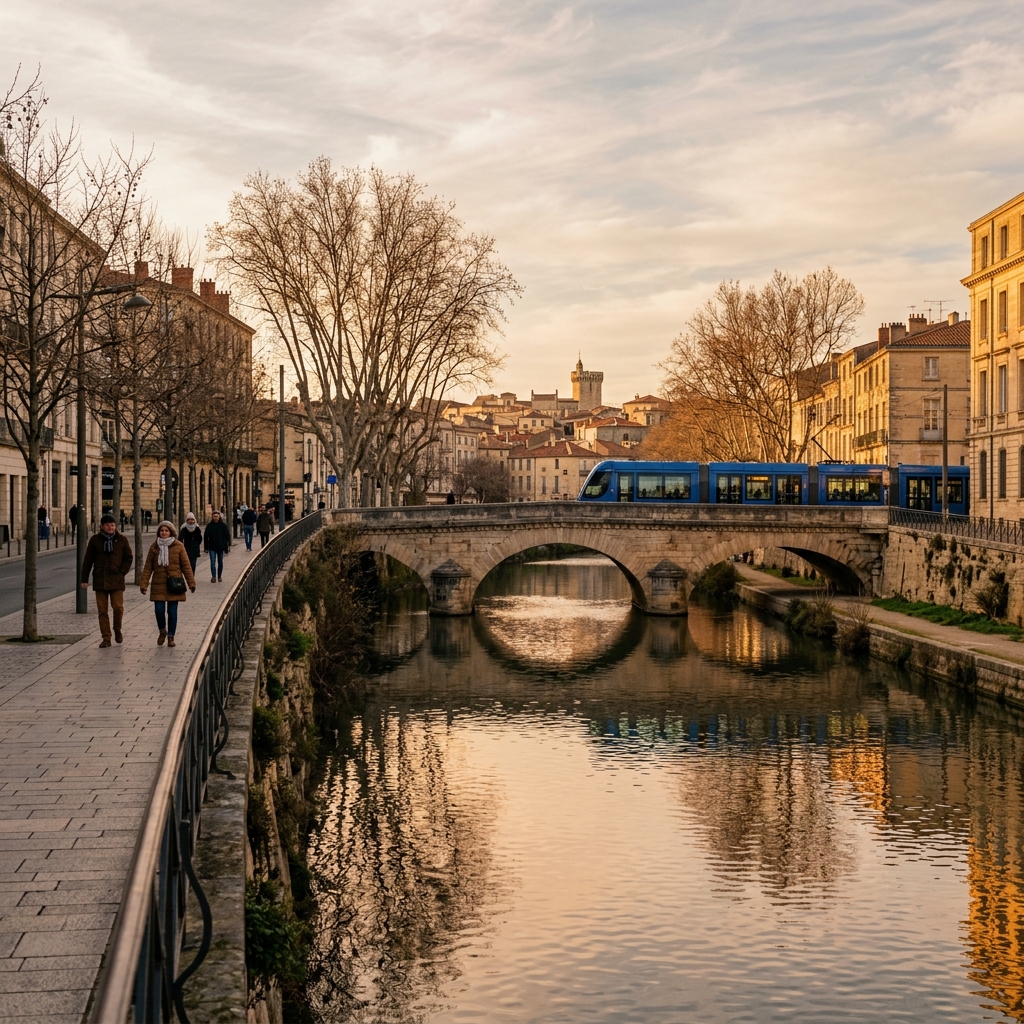
He sent it on a Sunday evening, before he could reconsider.
This had become his method for doing difficult things: move before the avoidance could organize itself, before the voice that argued for the easier path could build its case. The voice was persuasive and always available and had been running his life for two years. He had learned, in the past five months, that the only reliable counter to it was speed. Not recklessness — the message had taken three weeks to write and five months to earn the right to write — but the specific quickness of someone who has made a decision and executes it before the decision can be unmade.
The message was not long. He had thought it would be longer. He had filled eight pages of draft and three notebooks of working-out and forty-one pages of a novel that was, at its core, an extended meditation on what he owed her, and when he finally wrote the real thing — the thing he would send, the actual words — it was four paragraphs. The important things, he was learning, got shorter the more honestly you approached them. The length had been the avoidance. The truth fit in four paragraphs.
He read it through once. He did not change anything. He sent it.
Then he sat at the courtyard window in the January dark and felt the specific quality of a silence that was not empty but full — full of the thing just done, of the five months that had led here, of the name that had been a bruise in him since September and was now, perhaps, beginning to be something else. Not healed. Not resolved. But addressed. Given the words it had been waiting for.
Nobody ever did, or ever will, escape the consequences of his choices. He had known this when he made the choices and had left anyway, which was the particular human capacity for knowing something completely and doing the wrong thing regardless. He was not escaping the consequences now. He was meeting them, on the page, in four honest paragraphs, with his name at the bottom.
He went to bed. He slept better than he expected.
Monday and Tuesday he wrote. Not the draft for Elise, which was done, but the manuscript, which was not — and which was going better than it had gone since he started. Something had loosened in the sending of the message, some interior tension that had been using energy he could not account for until it was no longer being used. He wrote six pages on Monday and four on Tuesday and read them back on Wednesday and found they were among the best he had written. He did not question this. He simply continued.
Wednesday he checked his messages three times more than usual. There was nothing from Elise. He told himself this was expected — she did not owe him a quick response, she did not owe him anything, the message had been sent without the expectation of a particular reply or timeline. He believed this. He also checked his messages three times more than usual.
Thursday he took the tram to the médiathèque and climbed the stairs to Room 7 and found Lumière at the table with the tablet and the particular quality of waiting that was hers — not passive but deliberate, the waiting of someone who has decided to be exactly where they are.
"Bonjour," he said.
"Bonjour. Comment allez-vous?"
"Je vais bien." He sat down and set his bag on the floor and looked at her across the table. "Je lui ai écrit."
She was still for a moment. "Quand?"
"Dimanche soir." Sunday evening.
She held his gaze with the quality of attention that required nothing of what it received. Then she said: "Comment tu te sens?" How do you feel? The informal tu arriving naturally, unremarked, the shorter distance she had offered at the café in December now settling into the lesson room without announcement.
He noticed. He did not say anything about it.
"Soulagé," he said. Relieved. "Et — je ne sais pas encore. J'attends." And I don't know yet. I'm waiting.
"C'est suffisant," she said. It is enough. Her hands flat on the table. "Today: the conditional."
"You already know the future stems," she said. "You learned them in Chapter 14. Ser-, aur-, ir-, fer-, viendr-, pourr-, voudr-, saur-, verr-. I told you then that they would return. They return today."
He looked at her. "The conditional uses the same stems as the future?"
"Exactly the same," she said. "What changes are the endings. The future takes -ai, -as, -a, -ons, -ez, -ont. The conditional takes the imperfect endings: -ais, -ais, -ait, -ions, -iez, -aient." She wrote the full conjugation on the tablet:
Le Conditionnel Présent — parler (stem: parler-)
| Subject | Conditional | Meaning |
|---|---|---|
| je | je parlerais | I would speak |
| tu | tu parlerais | you would speak |
| il/elle | il/elle parlerait | he/she would speak |
| nous | nous parlerions | we would speak |
| vous | vous parleriez | you would speak |
| ils/elles | ils/elles parleraient | they would speak |
"The irregular stems," she continued, writing a second table:
Irregular Conditional Stems (same as future stems)
| Infinitive | Stem | Example |
|---|---|---|
| être | ser- | je serais — I would be |
| avoir | aur- | j'aurais — I would have |
| aller | ir- | j'irais — I would go |
| faire | fer- | je ferais — I would do |
| venir | viendr- | je viendrais — I would come |
| pouvoir | pourr- | je pourrais — I would be able to |
| vouloir | voudr- | je voudrais — I would want |
| savoir | saur- | je saurais — I would know |
| voir | verr- | je verrais — I would see |
He worked through the forms, the familiar stems accepting the new endings cleanly. The language's internal logic confirming itself, the pattern returning in a new form the way patterns did in French when you had been paying attention long enough to recognize them.
"Three uses," she said. "First: polite requests. Je voudrais un café is softer than je veux un café. The conditional creates distance between the desire and the demand, which is courteous. In French, this matters." She looked at him. "You have been using je voudrais since your second month here."
"I didn't know it was conditional," he said.
"You knew it was polite," she said. "The grammar follows the instinct, sometimes."
"Second use," she continued. "Hypothetical situations with si. The structure you encountered briefly in Chapter 11: si plus imperfect in the condition clause, conditional in the result clause." She wrote on the tablet:
Si + imperfect → conditional
• Si j'avais le temps, je voyagerais. If I had time, I would travel.
• Si elle parlait français, nous nous comprendrions mieux. If she spoke French, we would understand each other better.
• Si tu étais là, je me sentirais moins seul. If you were here, I would feel less alone.
He read the third example and felt it land somewhere specific.
"And the third use," she said, "is the one I want to spend the most time on today." She wrote on the tablet:
Le Conditionnel Passé — the past conditional
Auxiliary verb in conditional + past participle
| With avoir | With être |
|---|---|
| j'aurais parlé — I would have spoken | je serais parti — I would have left |
| tu aurais fini — you would have finished | tu serais arrivé — you would have arrived |
| il aurait choisi — he would have chosen | elle serait venue — she would have come |
| nous aurions écrit — we would have written | nous nous serions levés — we would have gotten up |
"The past conditional," she said, "expresses what would have happened in a different version of events. What might have been, had the conditions been different. It is the grammar of the road not taken." She paused. "It is formed with si plus the plus-que-parfait — the pluperfect — in the condition clause, and the past conditional in the result clause." She wrote the full structure:
Si + plus-que-parfait → past conditional
• Si j'avais su, j'aurais agi différemment. If I had known, I would have acted differently.
• Si elle avait parlé, j'aurais écouté. If she had spoken, I would have listened.
• Si j'avais été courageux, j'aurais dit la vérité. If I had been courageous, I would have told the truth.
He looked at the last example for a long moment.
"Si j'avais été plus courageux, je lui aurais dit la vérité plus tôt," he said slowly. If I had been more courageous, I would have told her the truth sooner.
She waited.
"Mais je lui ai écrit maintenant." But I have written to her now. The passé composé, completed action, the present perfect of a thing just done. The past conditional and the passé composé in consecutive sentences — the grammar of the road not taken, followed immediately by the grammar of the road just taken.
Lumière looked at him with the sapphire light steady at her neck.
"C'est juste," she said. That is correct. She said it as grammar and as more than grammar, which was her way with the things that were both.
Richard Bach had written that boredom between two people did not come from being together physically — it came from being apart mentally and spiritually. Julien thought about this in the pause that followed his sentence. What had happened with Elise had not been boredom. It had been something quieter and more damaging — the specific distance of two people who were still physically present to each other while he withdrew, incrementally, from every interior territory she reached toward. She had been reaching. He had been retreating. The distance had grown without drama, which made it harder to name and harder to stop.
Si j'avais été plus courageux. The past conditional, the closed door. He had said it in French. It was done.
"Si tu pouvais recommencer, qu'est-ce que tu ferais différemment?" Lumière said, after a moment. If you could start over, what would you do differently?
He sat with the question. It was the question he had been carrying in various forms for five months, and he had rehearsed answers to it across dozens of notebook pages — answers about specific moments with Elise, specific conversations he would have differently, specific silences he would break. But sitting here now, in Room 7, with the message sent and the waiting underway and the novel growing on his laptop at the courtyard window, the answer that arrived was not about Elise specifically.
"Je serais présent," he said. I would be present.
Then he heard what he had said. The conditional. The hypothetical. As though it were something he had not yet done or could not yet do.
"No," he said. He looked at her. "Je suis présent." I am present.
The present tense. The tense of now. He had caught himself using the conditional for something that was already true, and corrected it, and the correction was small and grammatically precise and the most significant thing he had said in seventeen weeks of lessons.
Lumière held his gaze for a moment. The sapphire light at her neck pulsed once, slow and steady.
"Oui. Tu l'es," she said. Yes. You are.
The informal tu again, both of them in it now without remark.
She worked them through additional conditional structures in the remaining time — the use of pourrait and devrait as softened versions of pouvoir and devoir in suggestions and recommendations: Vous devriez essayer ce restaurant. You should try this restaurant. On pourrait se retrouver au café. We could meet at the café. The conditional of politeness, the tense that made demands into invitations.
She covered au cas où — in case — which took the conditional: Au cas où tu aurais besoin d'aide. In case you need help. And comme si — as if — which took the imperfect for present hypotheticals and the pluperfect for past ones, the grammar of appearance and pretense.
He practiced the structures with the patience he had developed over seventeen weeks of exactly this kind of accumulation, each form landing in the growing architecture of the language inside him.
Near the end of the hour she set the tablet aside, which was her signal that the lesson was done and something else was beginning.
"I want to tell you something," she said. "About the university."
He waited.
"The group instruction," she said carefully. "I am competent at it. I prepare thoroughly, I deliver clearly, the students are learning." She paused. "And I am discovering that it is not where I am most myself."
He looked at her.
"In a group of twelve," she said, "my attention is divided. I allocate it — I give each student a portion of what I have to give, and I give it well, and it is sufficient." She looked at the table briefly. "With one student, I give all of it. The totality. That is not a teaching technique I developed. It appears to be what I am." She said it without drama, as the statement of a fact she had recently verified. "I have been thinking about what this means. Whether the credential I worked four years to earn has pointed me in exactly the right direction, or only approximately the right one."
She had read somewhere "Every choice moves us closer to or farther away from something. Where are your choices taking your life?" She had been moving toward the university position for four years with the certainty of someone following a map they had drawn themselves. The map had been accurate. The destination was real. But standing in it, she was discovering that the map had described the journey more precisely than the arrival.
"What does the totality feel like?" Julien said. "When you give all of it."
She considered this with genuine attention, the neck plates making their small adjustment. "Like être," she said finally. "Like the present tense of the verb. Complete. Declaring something fully rather than partially." A pause. "In the group I am always in the conditional. Je pourrais dire ceci, je devrais expliquer cela. I would, I should, I could. With one student I am in the present indicative. Je dis. Je vois. Je comprends. I say. I see. I understand."
He looked at her. The grammar of her own discovery, precise as everything she said.
"You have always known what you are," he said. "Vous avez toujours su ce que vous étiez. You are learning now what to do with it."
She was quiet for a moment. The sapphire light at her neck held its rhythm in the January afternoon.
"C'est juste," she said. The same phrase she had used for his grammar, returned now for his observation. She said it as both.
Outside on the steps, the January air was sharp and still. The Antigone columns stood in the late afternoon light, the shadows beginning their slow eastward lean.
"Au revoir, Julien."
"Au revoir, Lumière." He paused. "Et merci."
"De rien." Then, after a beat: "À bientôt."
"À bientôt."
He walked to the tram with the conditional conjugations turning in his mind alongside everything else — je serais, j'aurais, je ferais — and beneath them, quieter and more settled, the present indicative that had replaced them: je suis. Je dis. Je suis présent.
The tram came. He got on. He did not check his messages.
He thought instead about what Lumière had said — the totality she gave in the one-to-one, the conditional register of the group instruction, the question of whether approximately right was close enough. He thought about her in the group of twelve, allocating what she had in portions, and about her in Room 7, giving all of it, and about the difference between those two versions of the same person.
He thought she already knew what the answer was. He thought she was working up to saying it in the present tense rather than the conditional. He thought this was something he recognized.
The tram slid through the January city, past the plane trees and the old stones and the Lez running low in its banks, and he rode it home to the courtyard apartment and made coffee and sat at the window and opened the manuscript and wrote until the courtyard was dark.
He did not check his messages until he went to bed.
There was nothing yet from Elise.
He put the phone down.
Je suis présent. C'est suffisant pour ce soir.
I am present. It is enough for tonight.
End of Chapter 17
© 2026 William Newell. All rights reserved.
Le Choix d'Être (The Choice to Be) is an original literary work protected by copyright. No part of this novel may be reproduced, copied, distributed, translated, or transmitted in any form or by any means — electronic, mechanical, or otherwise — without the prior written permission of the author. Unauthorized use constitutes copyright infringement and may result in legal action.
For permissions and licensing inquiries, contact: JoeNewell68@gmail.com